Custom Cookie Cutter Generator
Your Shape, Ready to 3D Print
Make a custom cookie cutter in a few minutes with this free cookie cutter generator: choose one of 14 built-in shapes, type a name of up to eight letters, or upload your own SVG, PNG or JPG drawing, and download a cookie cutter STL that is ready to slice.
Building the cutter…
The blade is designed for 3D printing. Its 1.0 mm cutting edge thickens in steps to 2.2 mm at the base, so it prints without supports, and a 4 mm lip on the bed gives your palm somewhere to press. Inner lines can press a pattern into the dough or cut extra holes, a handle bar stiffens big cutters, and the model is mirrored so lettering reads the right way on the cookie. Warnings flag walls too thin for your nozzle and parts of the cookie that would tear. We don’t sell finished cutters: the generator makes the file, and you print it on your own machine or send it to a print service. This cookie cutter STL maker runs entirely in your browser, with no upload and no account.
Start from a sample drawing
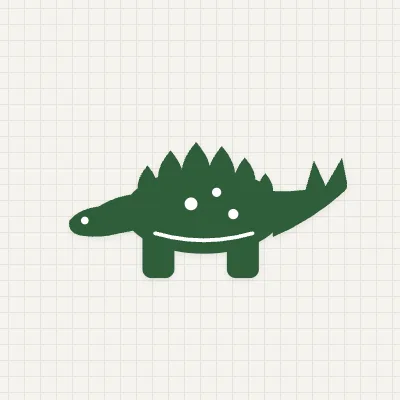
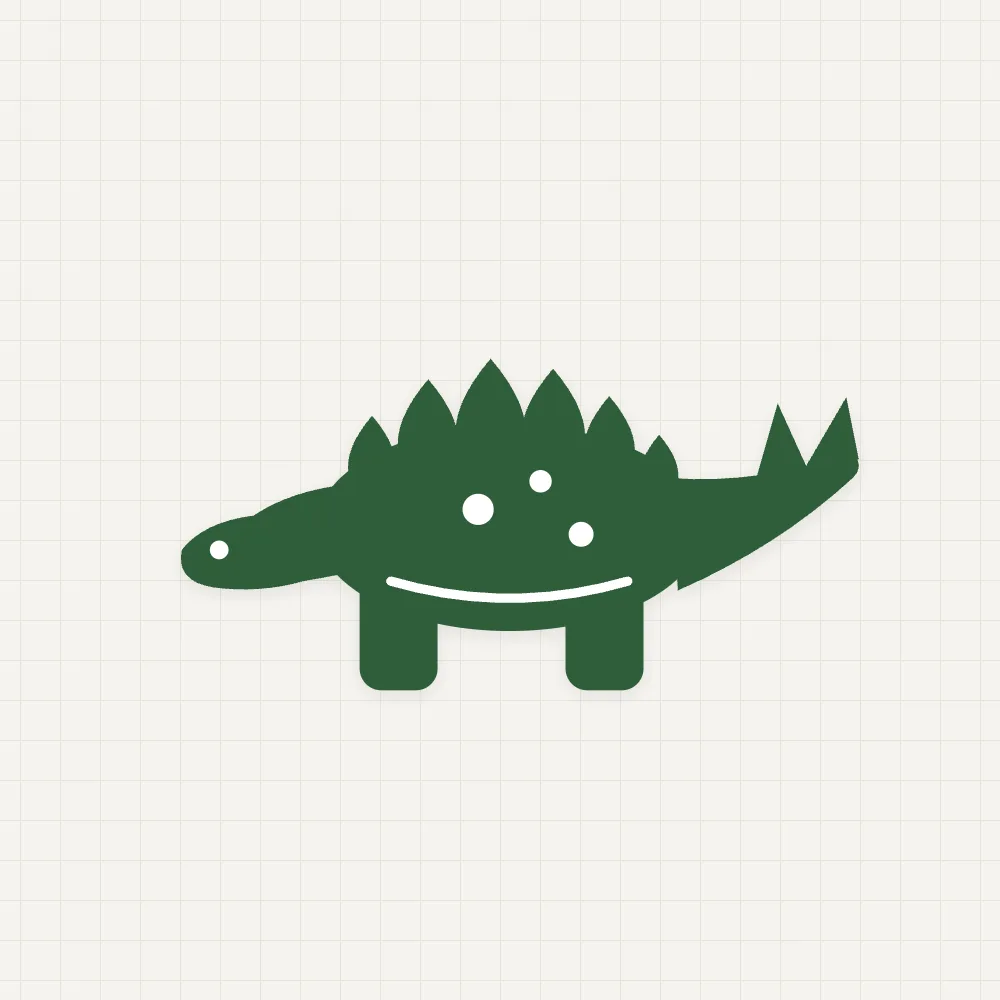
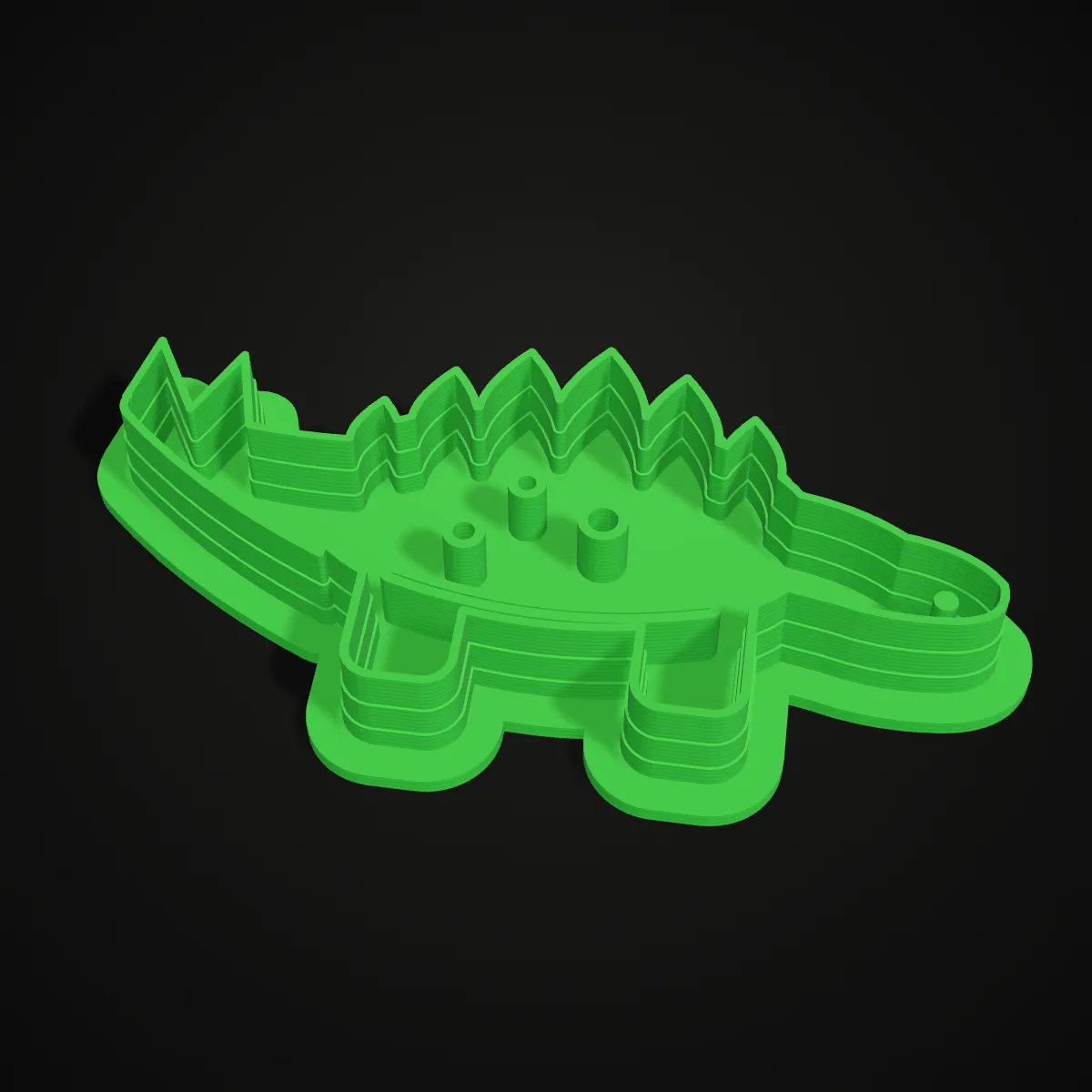
Three files that show how real artwork becomes a custom cookie cutter in the Upload tab, each opening with its own size and settings. The stegosaurus SVG loads at 95 mm with Imprint on, so its white eye, spots and belly line become ribs. The hand-drawn heart PNG loads at 80 mm with Imprint, traced from pixels rather than vectors. The stroked snowflake SVG loads at 85 mm as a plain outline. Click Try it to load one, or Download to open the file yourself.


Gingerbread cutter, start to STL in 18 seconds
One custom cookie cutter, recorded start to finish on this page: the gingerbread person is picked, the cookie width goes from 80 to 105 mm and the blade from 14 to 18 mm, and the “add a handle bar” warning pops up. Switching Inner details to Imprint adds a back plate that stiffens the cutter, so the warning disappears. After a quick orbit the STL downloads: 116 × 132 × 18 mm, 25,274 triangles and about 41 g of PLA.
Six drawings turned into custom cookie cutters
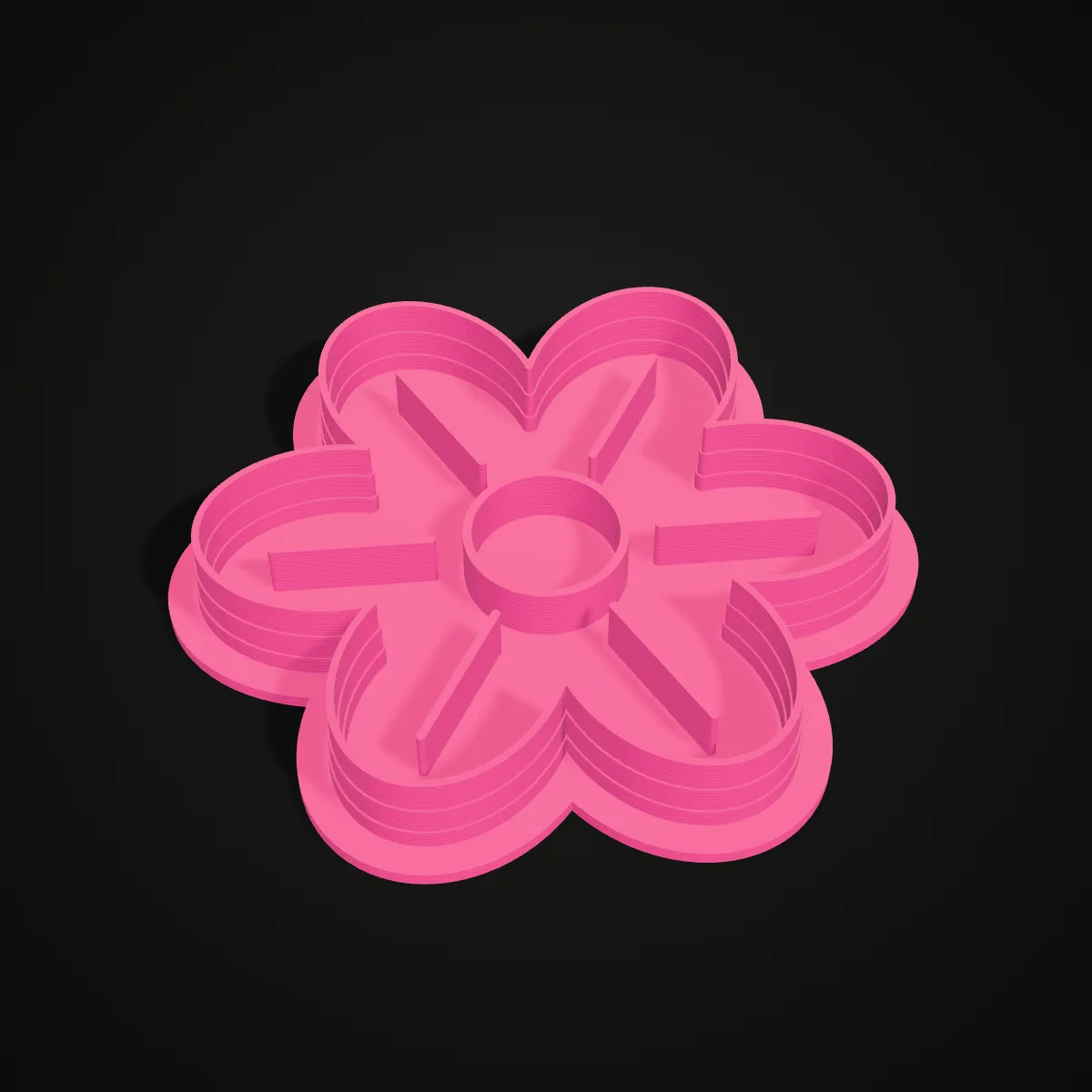
Left: the source, which is an uploaded SVG or PNG, a word typed in the Letters tab, or a built-in shape. Right: the cutter the generator built from it, rendered in PLA. Most are shown print side up and therefore mirrored on purpose; flip the cutter over and the cookie comes out the right way round.







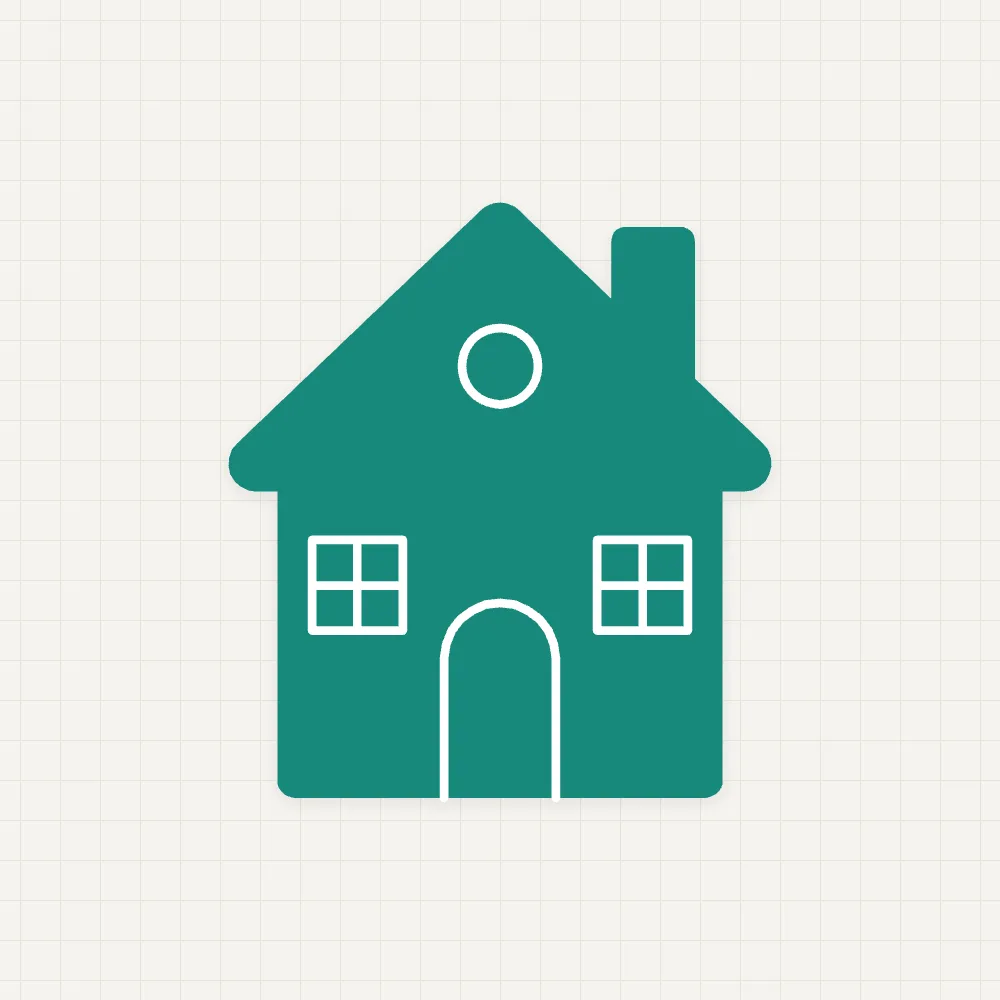
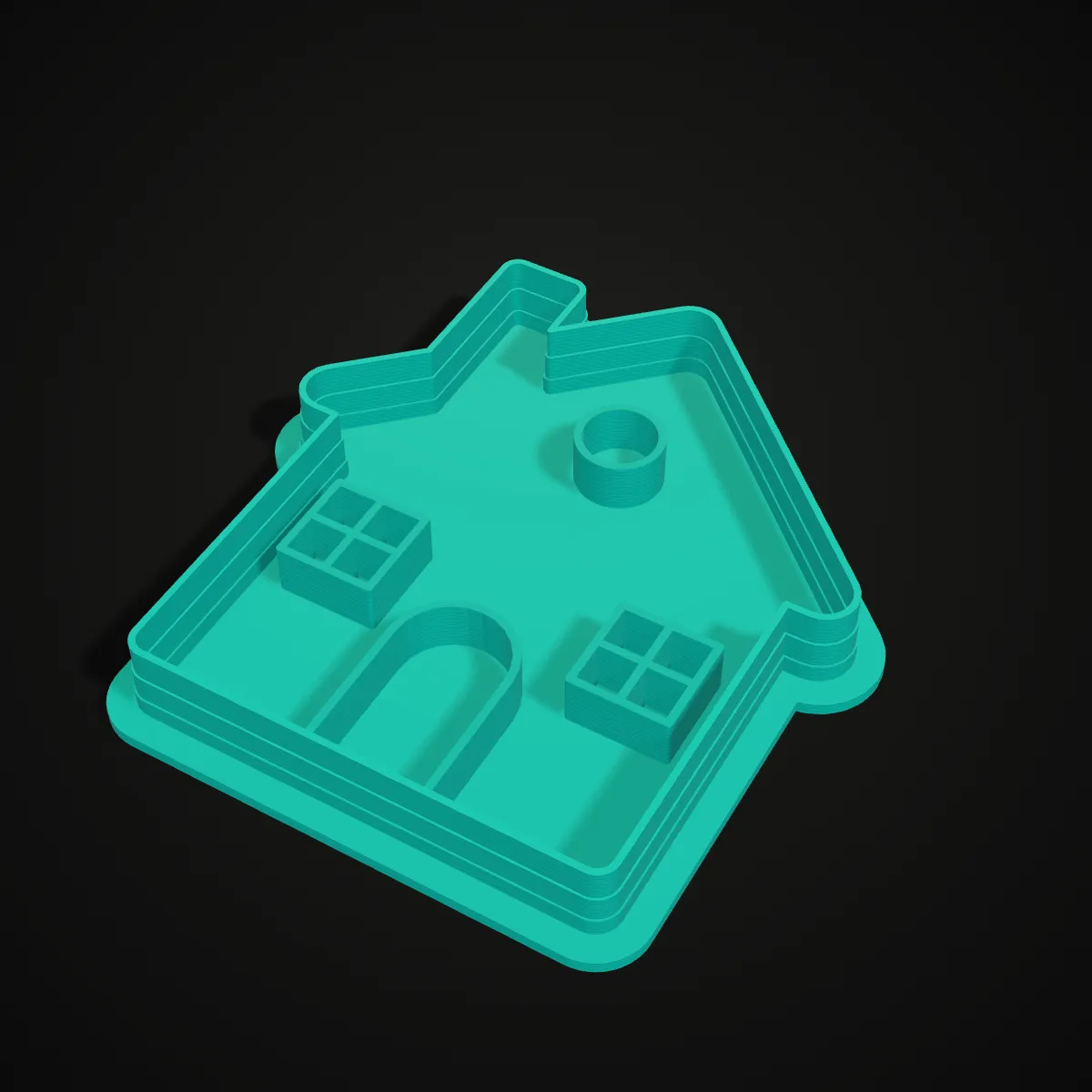
Custom cookie cutter shapes from the generator
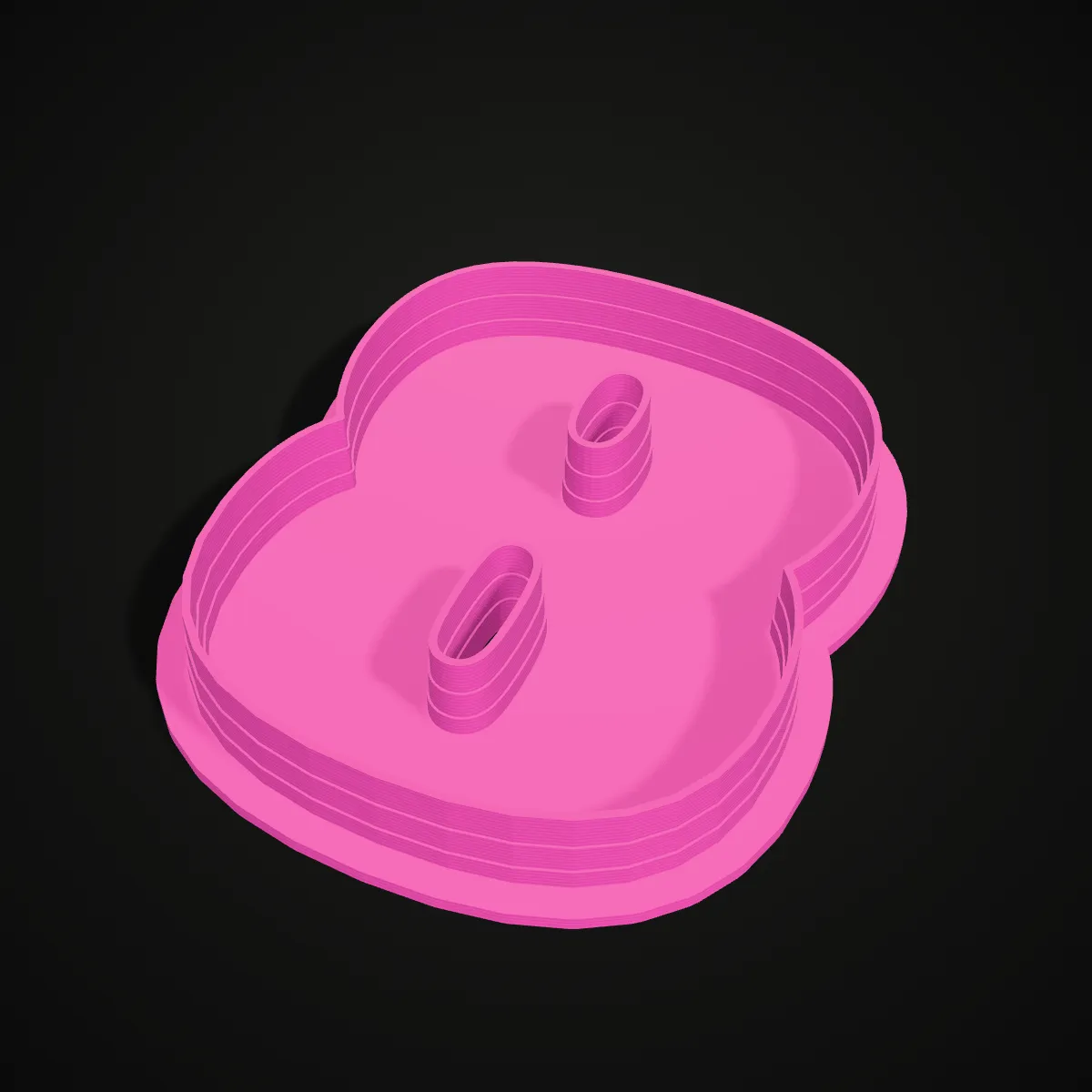
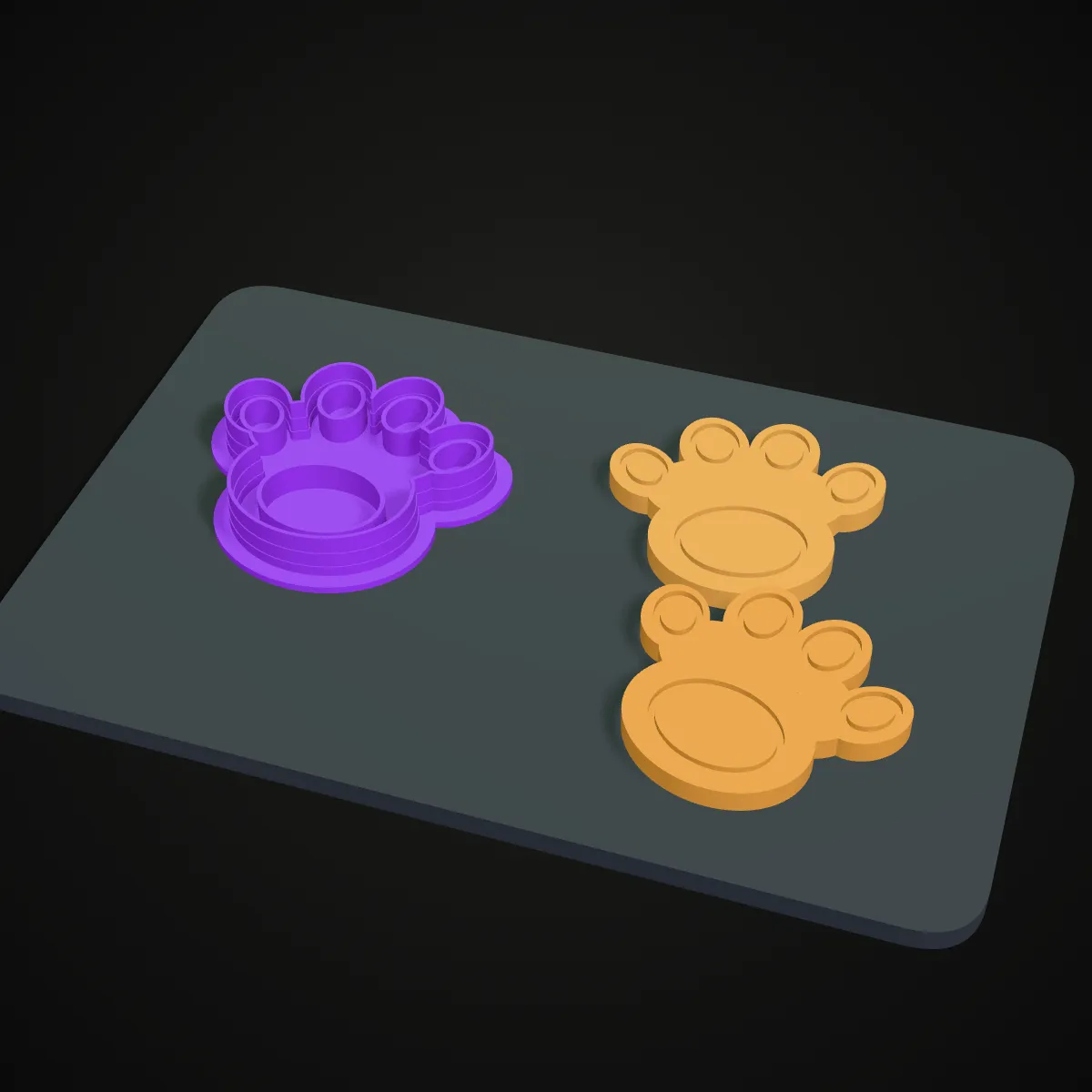
Eight cutters made from the built-in library and the Letters tab, rendered in PLA. The last two are 3D renders of a cutter in use, not photos of real dough or baked cookies.
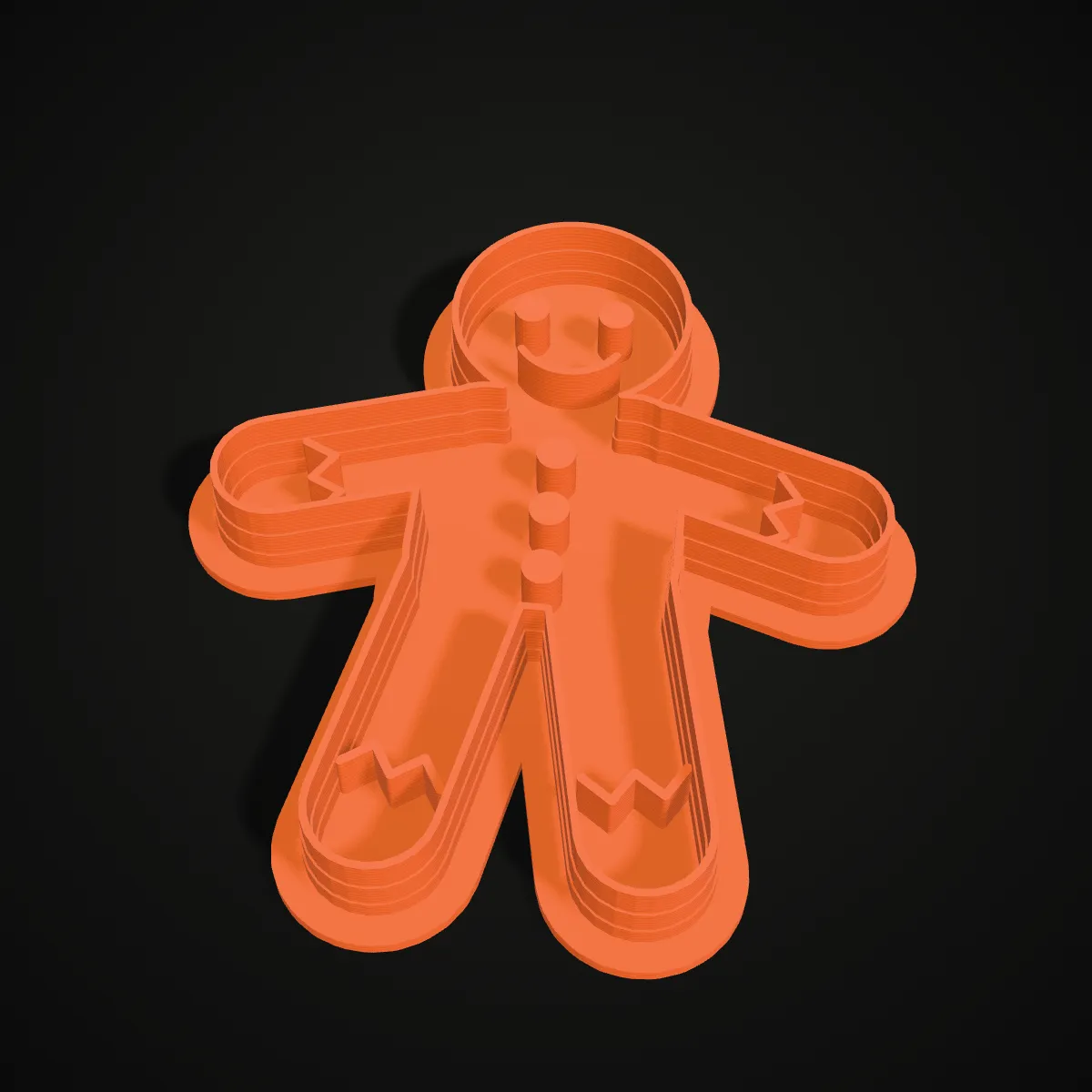

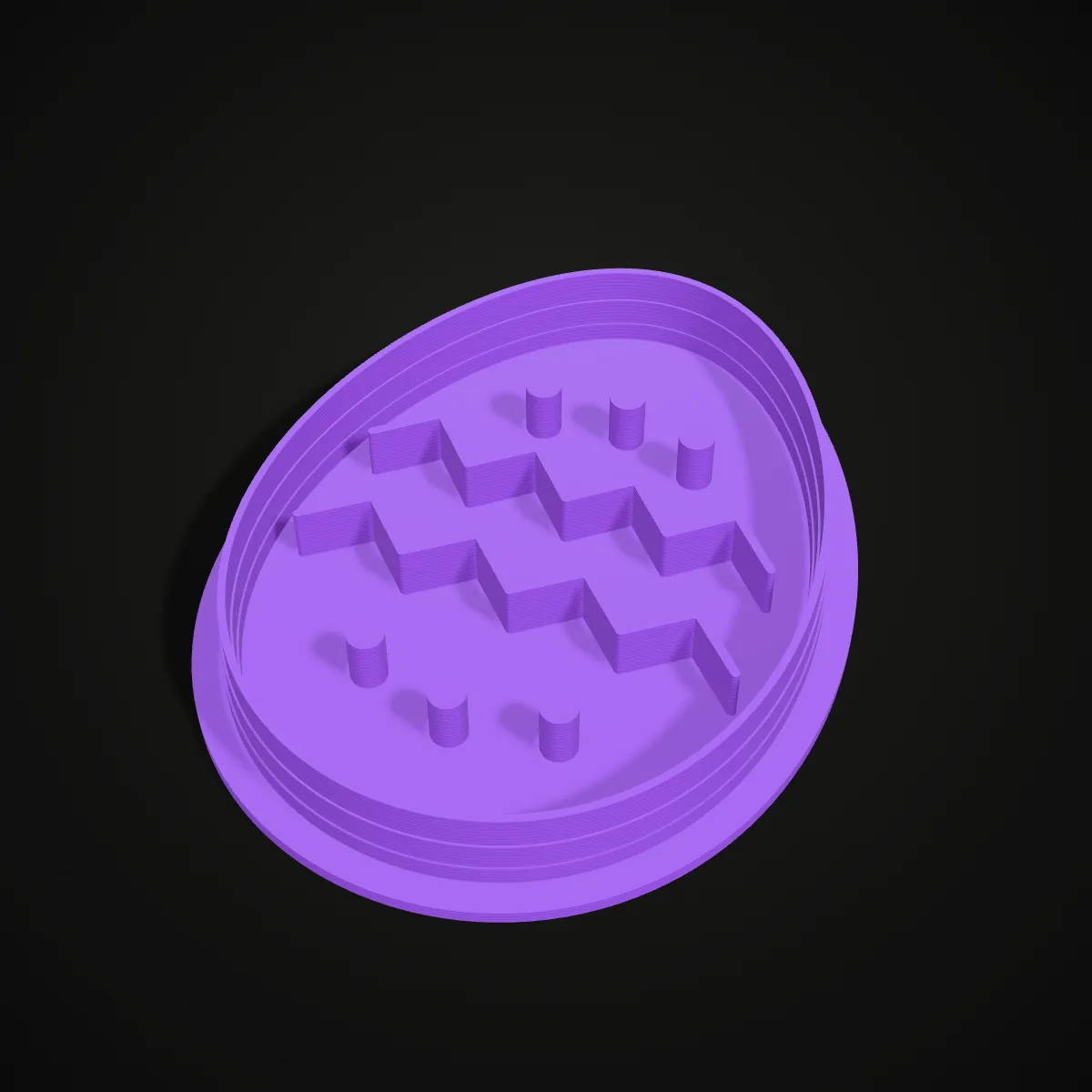



How to make a custom cookie cutter STL
- 11
Choose a shape, a name or your own art
Shapes holds 14 outlines, from heart and star to dinosaur and Christmas tree, each with imprint lines. Letters takes up to 8 characters (A–Z, 0–9, & ! ? # +) in Titan One and joins them into one cookie. Upload reads an SVG up to 5 MB, or a PNG, JPG or WebP up to 15 MB, and traces it with Threshold and Smooth outline sliders.
- 22
Size the cookie, tune the blade
Cookie width runs from 25 to 220 mm and measures the cookie itself, inside the blade. Blade height starts at 14 mm. Under Blade and lip, set the cutting edge (1.0 mm), Thicker at the base, and the lip’s width and thickness. Inner details offers None, Imprint or Cut holes; a handle bar can run Across or Lengthwise.
- 33
Read the warnings, download, print
Notes under the controls flag an edge too thin for your nozzle, spots where the cookie is under 4 mm wide, and wide cutters with nothing to stiffen them. Download an STL or 3MF; the line under the buttons gives triangles, size and grams of PLA. Print it as exported, lip on the bed, without supports.
Recommended settings by cutter type
Starting points for a custom cookie cutter printed with a 0.4 mm nozzle and used on rolled dough about 6 mm thick, checked against the generator’s own warnings. With a 0.6 mm nozzle, raise the cutting edge to 1.2 mm (two line widths). Every type prints the same way: PLA or PETG, 0.2 mm layers, lip down, no supports. Infill barely matters, because a cutter is almost all walls and the 2 mm lip is mostly top and bottom layers.
| Cutter | Cookie width | Blade height | Cutting edge | Inner details and extras | Watch for |
|---|---|---|---|---|---|
| Small and detailed (minis, fondant toppers) | 40–60 mm | 10–12 mm | 0.8–1.0 mm, thicker at the base | None, or Imprint with 1.0–1.2 mm lines | Parts under 4 mm wide tear or stick; the narrow-spot warning shows how many. Drop fine details instead of shrinking them. |
| Standard cookie | 60–90 mm | 14 mm (default) | 1.0 mm stepping to 2.2 mm | None; lip 4 mm wide, 2 mm thick | The defaults are tuned for this size: an 80 mm heart comes to about 10 g of PLA. |
| Large, with handle bar | 100–150 mm | 16–18 mm | 1.2 mm | Handle bar Across, 8–10 mm wide; or a back plate from Imprint | Over 100 mm with no handle and no back plate, the tool warns that the blade will flex. |
| Letters and names | 100–130 mm for 3–5 letters | 14 mm | 1.0 mm | Join letters on; Imprint for the inner shapes of letters | EMMA at 110 mm still shows 3 narrow spots of about 3.4 mm, so go wider or shorter. Mirroring is on by default. |
| With imprint (faces, windows, veins) | 80–110 mm | 14 mm | 1.0 mm | Imprint: ribs 10 mm high, 1.2 mm wide | Groove depth = dough thickness − (blade height − imprint height): about 2 mm in 6 mm dough with the defaults. |
| With cut-out holes (numbers, rings) | 70–100 mm | 14 mm | 1.0 mm | Cut holes; a back plate holds the inner blades | A hole needs about 7.4 mm across before it gets its own blade; smaller ones stay closed and the tool tells you. |
What to make with a custom cookie cutter generator
Holiday and seasonal cookie sets
For custom cookie cutter shapes that match the season, the built-in library follows the baking calendar: Christmas tree, gingerbread person and the snowflake sample for winter, Easter egg and flower for spring, heart for Valentine’s Day, crescent moon for Ramadan and Eid. Switch Inner details to Imprint and the garlands, buttons and zigzags press into the dough as guides for icing.
Birthday names and numbers
A name is the quickest customized cookie cutter. Type a child’s name or an age in the Letters tab: up to eight characters, joined into one cookie and mirrored so it reads correctly. For a 0, 6, 8 or 9, choose Cut holes and the counters get their own blades. There is one font and no letter-spacing control, so long names work better split over two cutters.
Logo cookies for a business or event
A café logo, a bakery mark or a wedding monogram makes a customized cookie cutter that guests remember. Upload the artwork as SVG or a clean PNG, thicken thin strokes, and keep the outline simple; inner marks can become an imprint. Use only logos you own or have written permission to use.
Clay, fondant and play-dough
The same cutters shape polymer-clay earrings, fondant cake toppers and play-dough for kids. For thin clay sheets, a 10 mm blade is enough and prints faster. Keep clay cutters for clay: once a tool has been used with polymer clay, don’t put it back into the kitchen.
Sandwich, toast and fruit cutters
A custom cookie cutter for lunch boxes needs more blade than one for cookies. Go 110–150 mm wide and 20 mm or more tall so the cutter passes through bread and filling, and add a handle bar so it doesn’t bend when you press through cheese, toast or melon slices.
No printer? Order the print
If you searched for a custom made cookie cutter to buy, the honest answer is that Ship3D doesn’t sell or ship cutters. You can still design the shape here, download the STL or 3MF, and send it to a makerspace, a library printer or an online print service. Ask for PLA or PETG, 0.2 mm layers, printed lip-down.
Custom cookie cutter questions
Pick a shape, type a name or upload a drawing on this page, set the cookie width, download the STL and print it lip-down in PLA or PETG on your 3D printer. An 80 mm custom cookie cutter uses about 10 g of filament. Without a printer of your own, send the file to a print service or makerspace; this site makes the files, it doesn’t sell custom made cookie cutters.
PLA is a common choice for cutters that touch raw dough for a few seconds, but no 3D printed cutter is certified food safe, and we can’t make yours so. When a filament maker says its PLA or PETG meets FDA or EU food-contact rules, that covers the raw material, not a part printed with colourants, through a brass nozzle that may contain lead, with layer lines that trap dough. Lower the risk: choose a filament sold for food contact, use a clean or stainless-steel nozzle, hand wash in warm water (PLA softens at around 60 °C, so no dishwasher), and replace the cutter when it chips or holds dough in its layers. Cling film between cutter and dough adds a barrier.
For rolled dough about 6 mm (¼ in) thick, a blade of 12–15 mm is plenty, which is why the generator starts at 14 mm. Raise it to 18–20 mm for thick dough, sandwiches or large cutters you want to grip deeper. The slider goes up to 30 mm, but a tall, thin blade flexes more and puts the cutting edge further from the stiff lip.
About 1 mm at the cutting edge and around 2 mm at the base. That is the default here: 1.0 mm along the top third of the blade, 1.6 mm in the middle and 2.2 mm in the lower third. Keep the edge at least two nozzle widths (0.8 mm for 0.4 mm, 1.2 mm for 0.6 mm) or the slicer may drop it; the tool warns you. The taper is three steps, not a smooth slope, so you will see two small ledges on the blade; they don’t affect the cut.
Yes, any clear drawing or logo can become a custom cookie cutter. Upload an SVG, or a PNG, JPG or WebP of a dark drawing on a light background; a light shape on a dark background is detected and switched automatically, and transparent PNGs are traced by their alpha. The outer outline becomes the blade, inner lines become imprint ribs or extra blades, and the inside of a pen outline is ignored. Simplify first: thicken thin strokes, remove tiny details, and keep the cookie at least 4 mm wide everywhere. Live text in an SVG is skipped, so convert it to outlines.
No. Print the cookie cutter STL exactly as it downloads, lip flat on the bed and cutting edge up. Each thinner band of the blade sits on a thicker one, and the imprint ribs, back plate and handle bar all rise from the lip side, so nothing overhangs. Use 0.2 mm layers on a 0.4 mm nozzle and a slower outer wall for a cleaner edge. There are no push-out holes, so dust the cutter with flour if dough sticks under an imprint plate.
Related tools






Cookies sorted? Try a full 3D model next
A cutter is an outline with height. For a rounded figurine, a cake topper or a toy, Ship3D’s AI generator turns a photo or a sentence into a 3D model you can print.
Free to sign up, no credit card required. Try it once for free.