3D Print Cost Calculator
Volume, Weight, Time and Price From Your Model
This 3D print cost calculator opens your model and tells you what the print will use and what it will cost: model volume, weight, filament length, print time, material and electricity, plus a selling price when you need one.
Your estimate appears here
Drop a model (or pick a sample) to see volume, weight, filament length, print time and cost. No file? Switch on "Use my slicer's numbers".
It reads STL, OBJ, 3MF, GLB/glTF, PLY and STEP/IGES files (FBX and DAE open too), measures the volume from the mesh itself and subtracts sealed cavities, so it doubles as an STL volume calculator. From there it models what a slicer lays down: walls, top and bottom skins and infill on a filament printer, or resin plus supports, with optional hollowing, on an SLA / MSLA printer. Pick one of seven filaments or three resin types, enter what your spool or bottle really cost, and every figure updates as you type, with the same part priced in the other materials underneath. Nothing is uploaded; the maths runs in your browser. Treat the result as a solid estimate rather than a slicer report: once the part is sliced, switch on “Use my slicer’s numbers” and let the 3D print cost calculator price the actual job.
Try the 3D print cost calculator on a sample part
Three watertight parts we modelled in CadQuery for this page. Try it loads one into the 3D print cost calculator at its defaults (PLA, 15 % infill, 2 walls, 0.2 mm layers): the planter comes out at 68 g and $1.39, the gearbox lid at 22 g and $0.44, the figurine base at 16 g and $0.32. Change one setting at a time to find the one that moves the price.
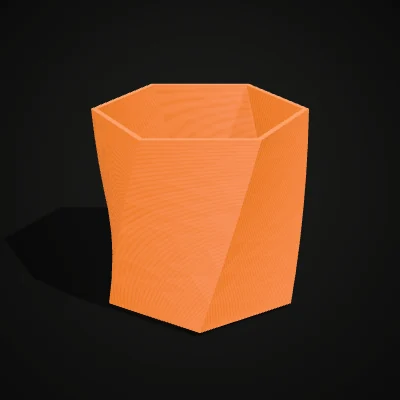
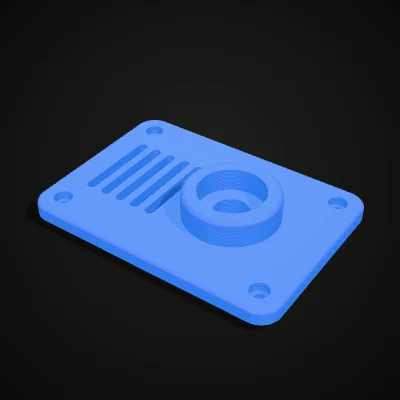
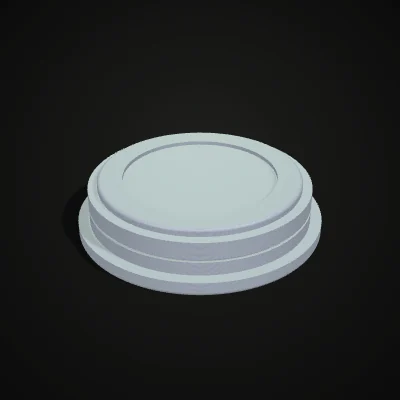
Watch the 3D print cost calculator re-price a planter
An 18-second recording of the 3D print cost calculator at work. The planter sample loads at PLA, 15 % infill and 2 walls: $1.39. Switching the material to PETG makes it $1.57, because PETG is a little denser, its example spool price is higher and its slower default flow adds print time. Dragging infill from 15 to 40 % takes it to $1.73, and one extra wall jumps it to $2.09: on a pot with 2.4 mm sides, the third wall fills them almost solid. Copy then puts the whole summary on the clipboard, ready to paste into a message or a spreadsheet.
From model to quote, four times over
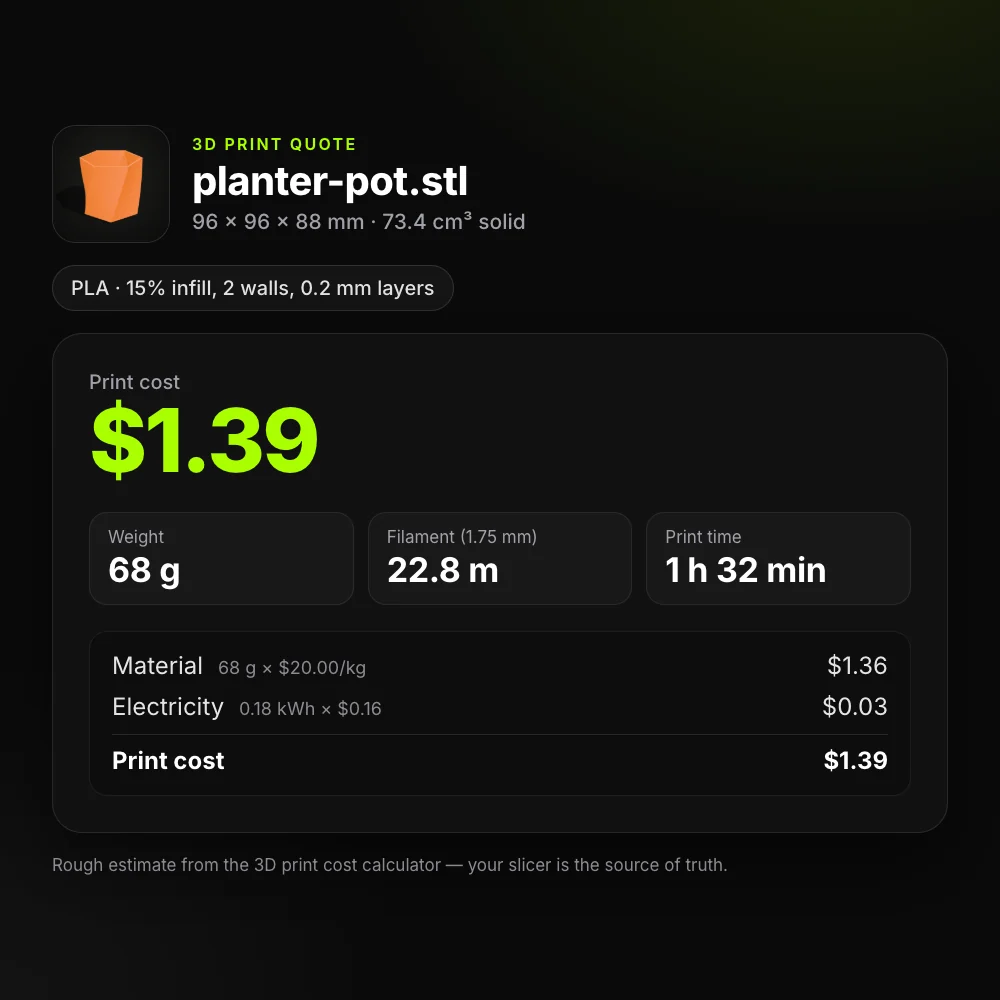
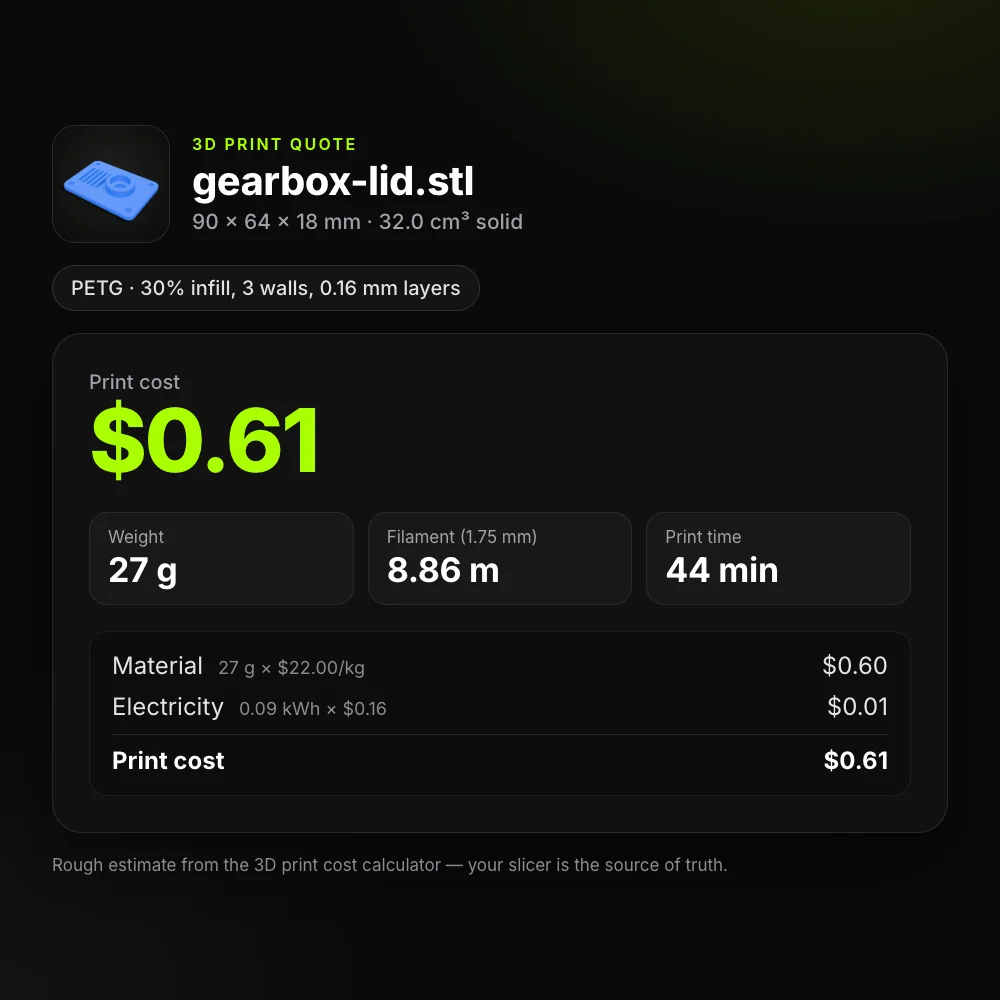
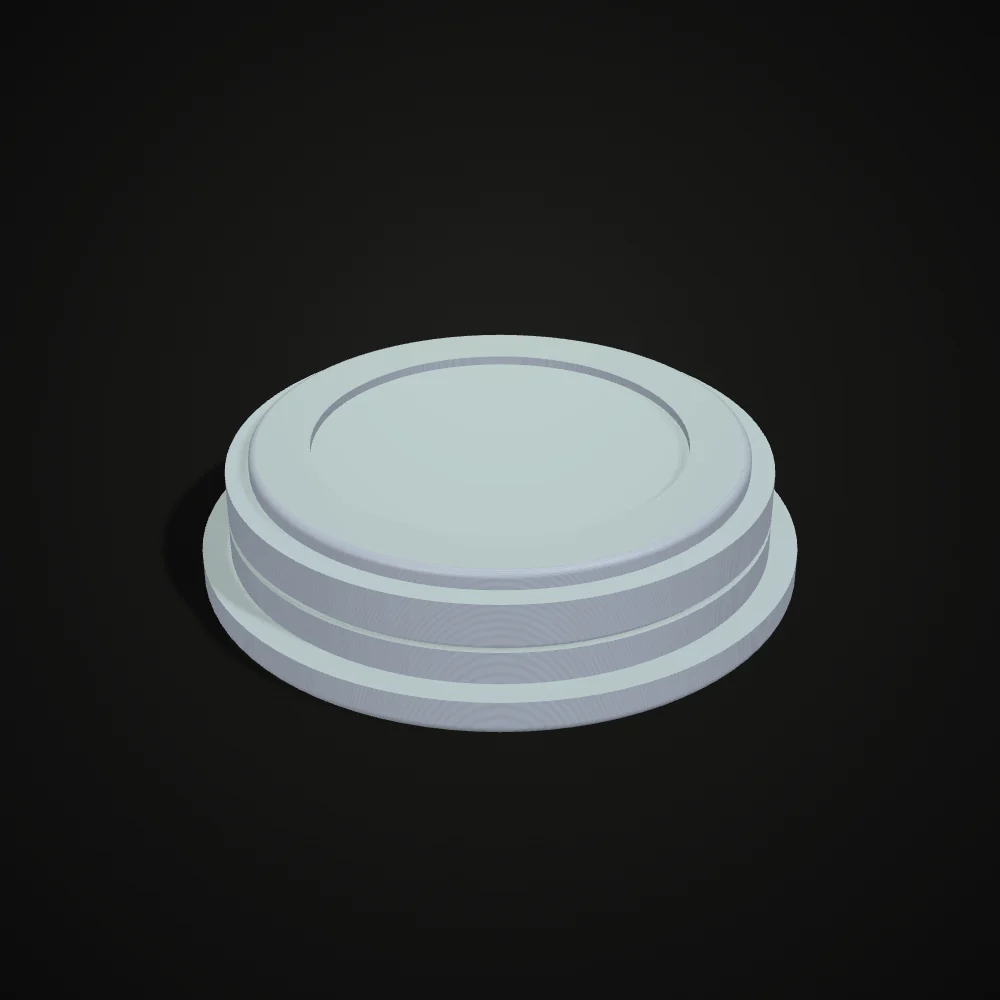
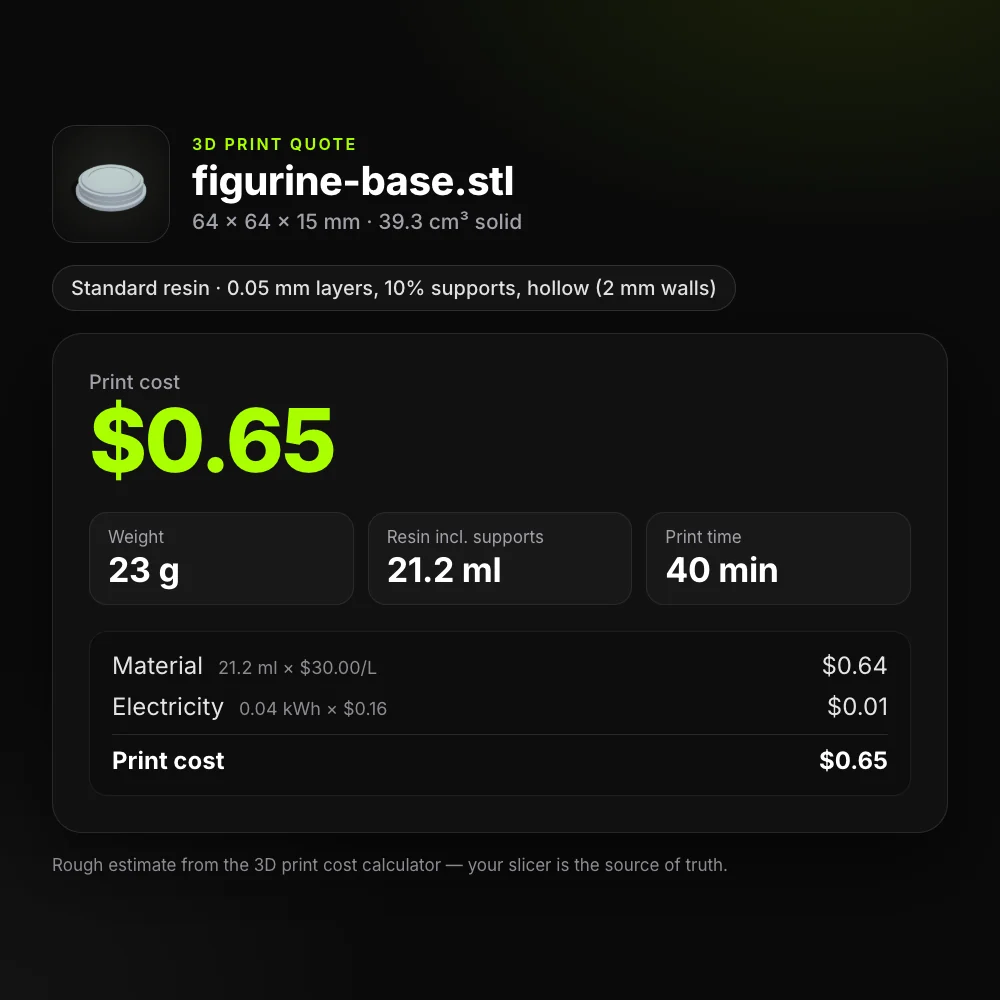
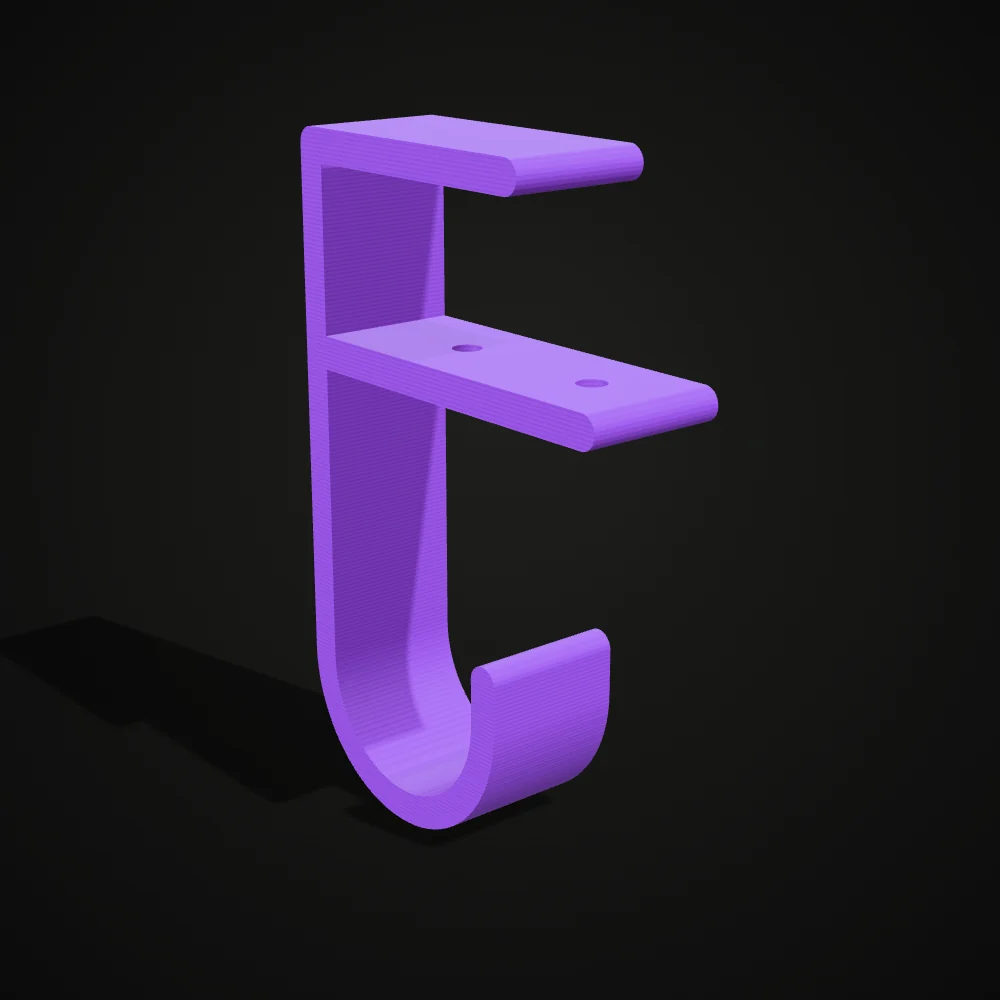
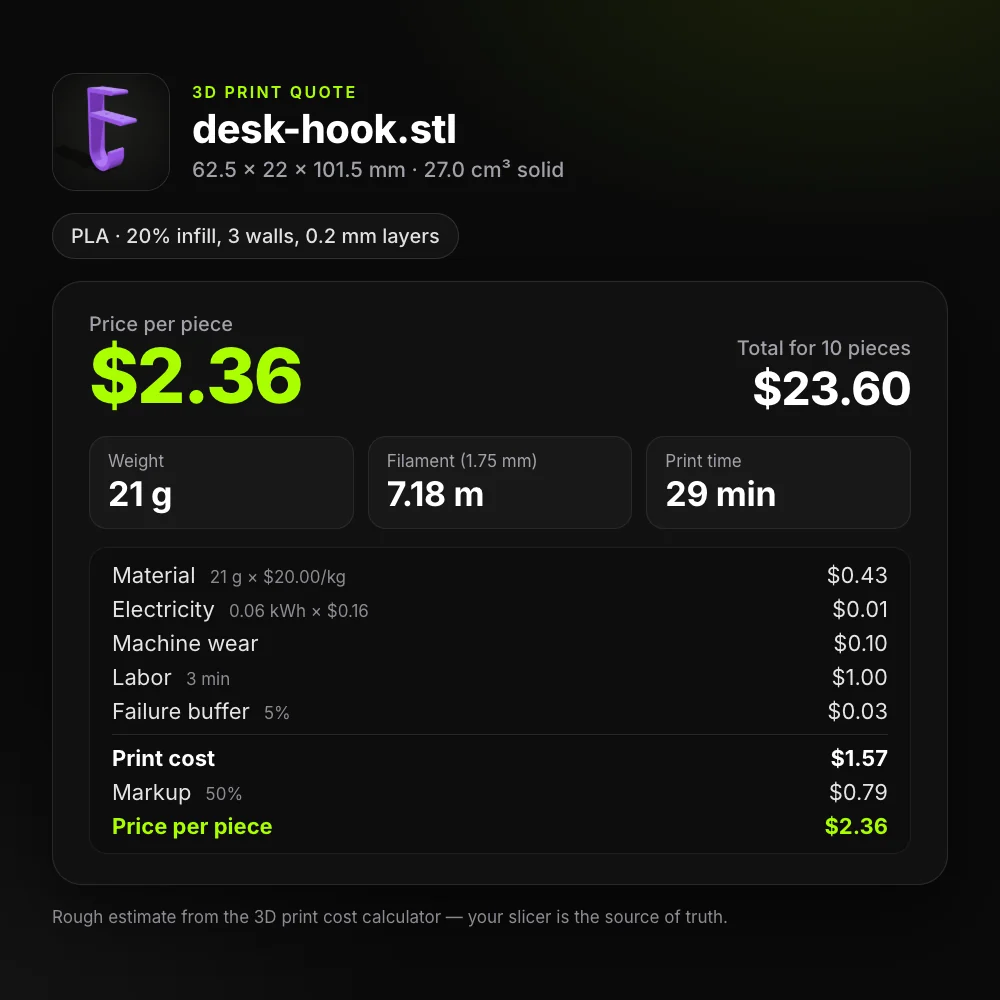
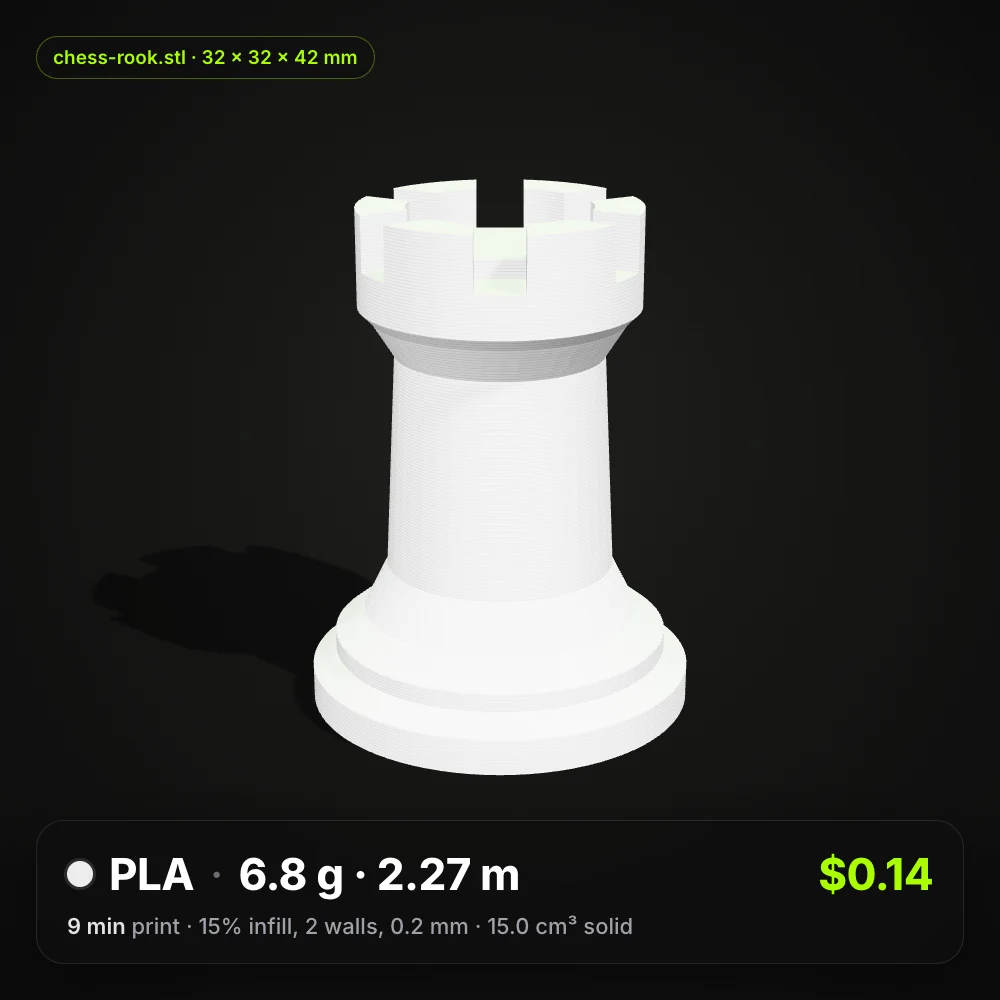
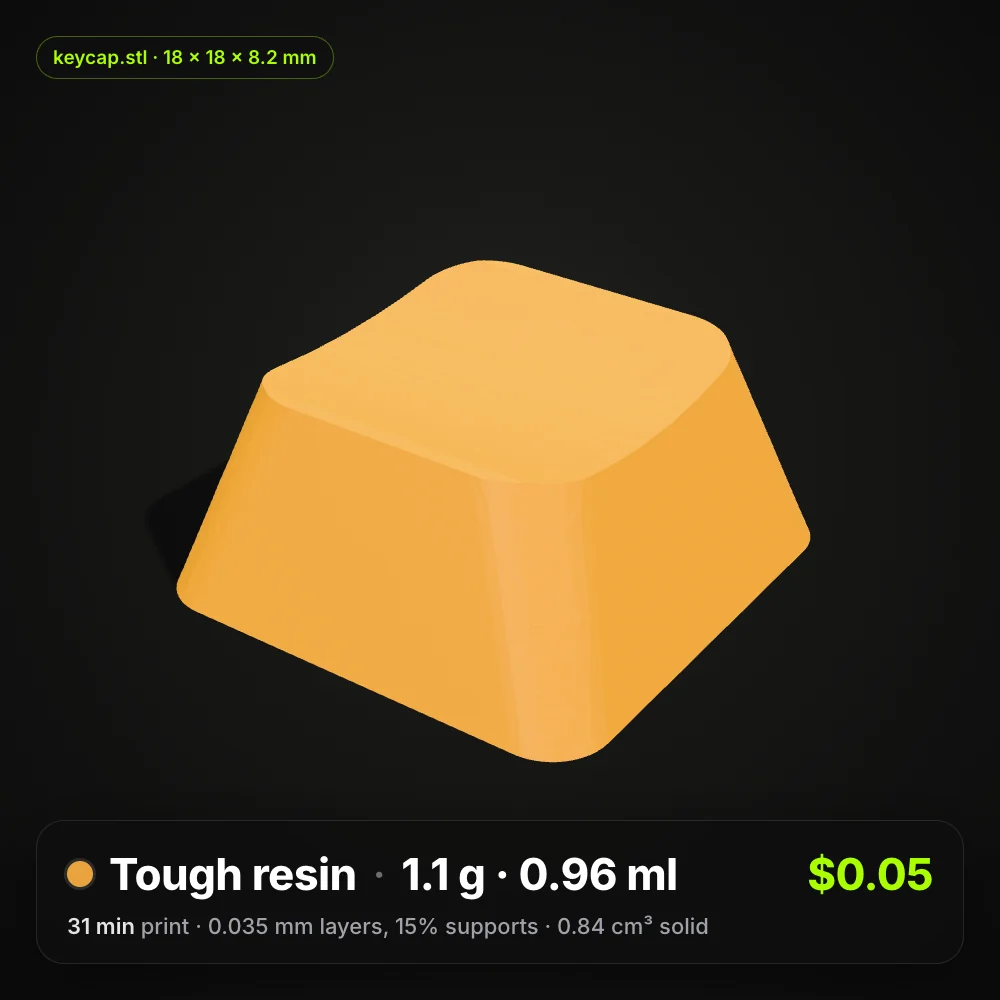
Each pair is one real calculation. Left: the part, rendered with print layer lines. Right: the quote card the 3D print cost calculator produced at its example USD prices. The first three are plain print costs (material plus electricity); the last uses the selling-price mode for a batch of ten.
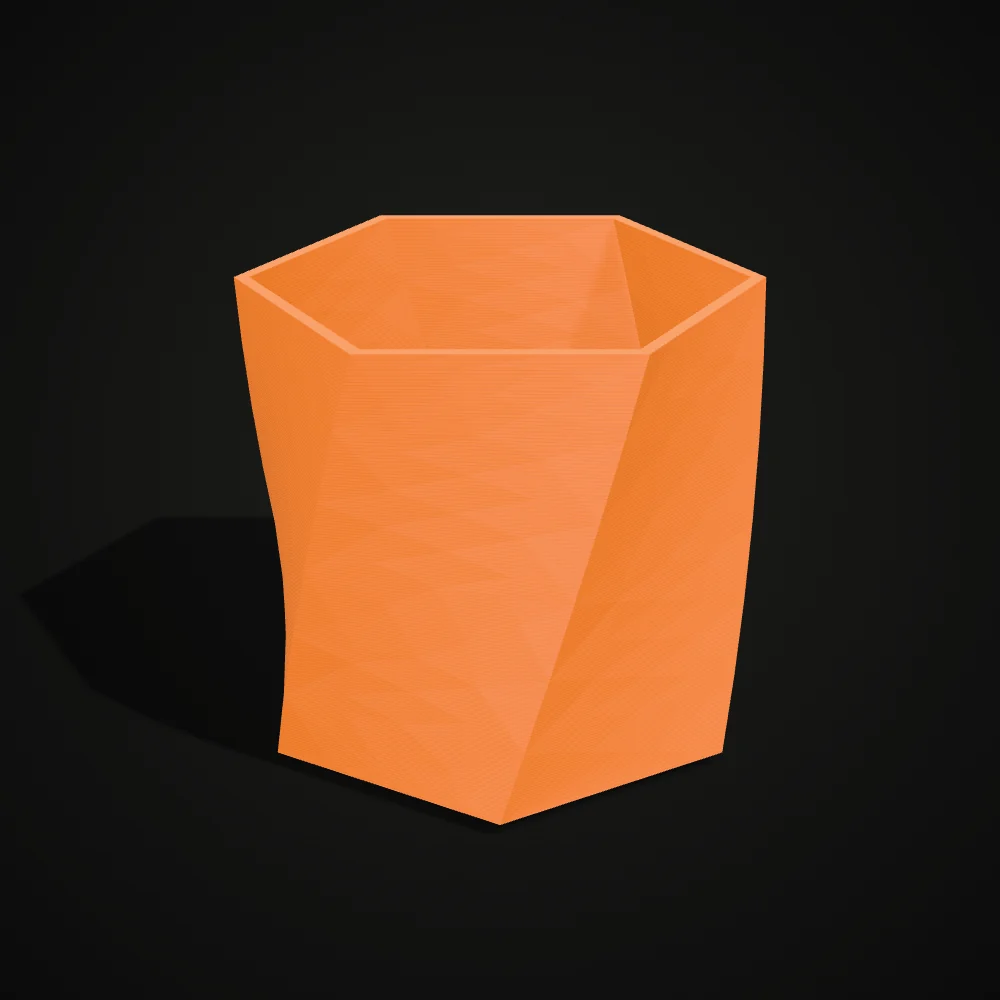

3D printing cost examples: eight parts, seven materials
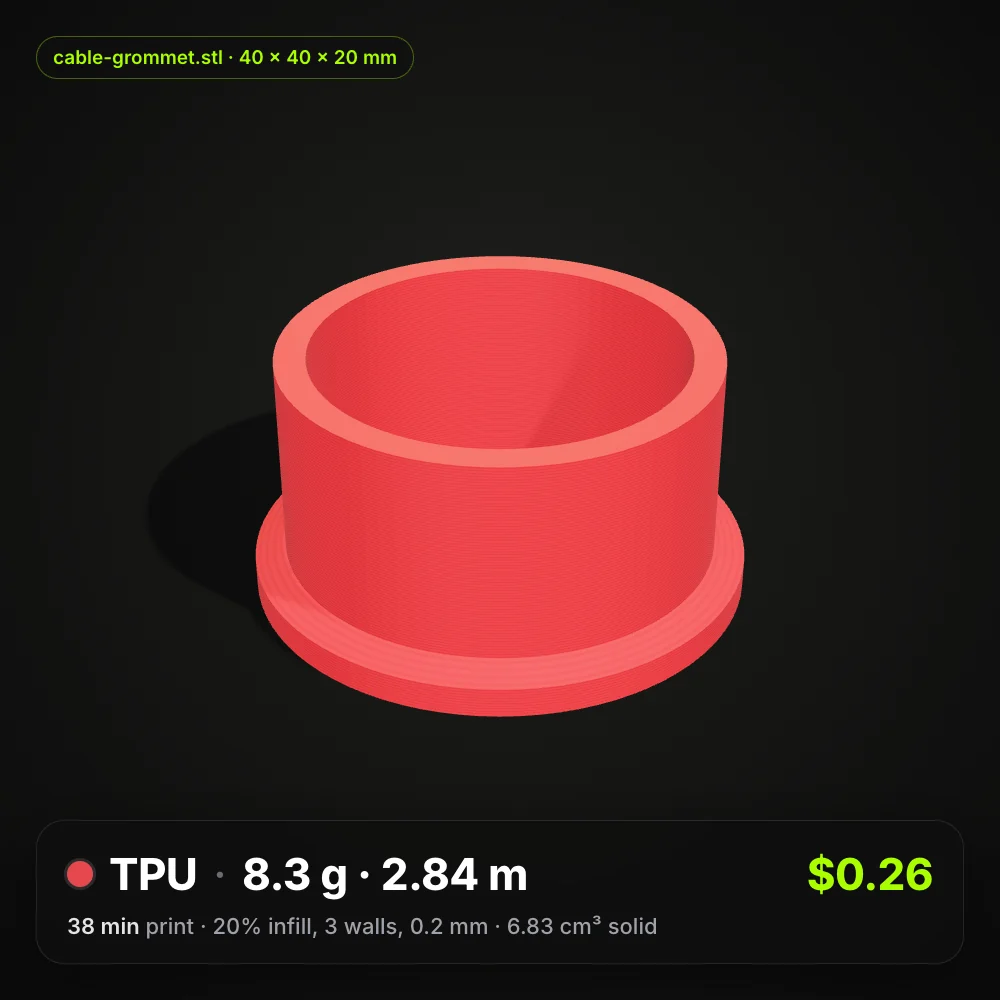
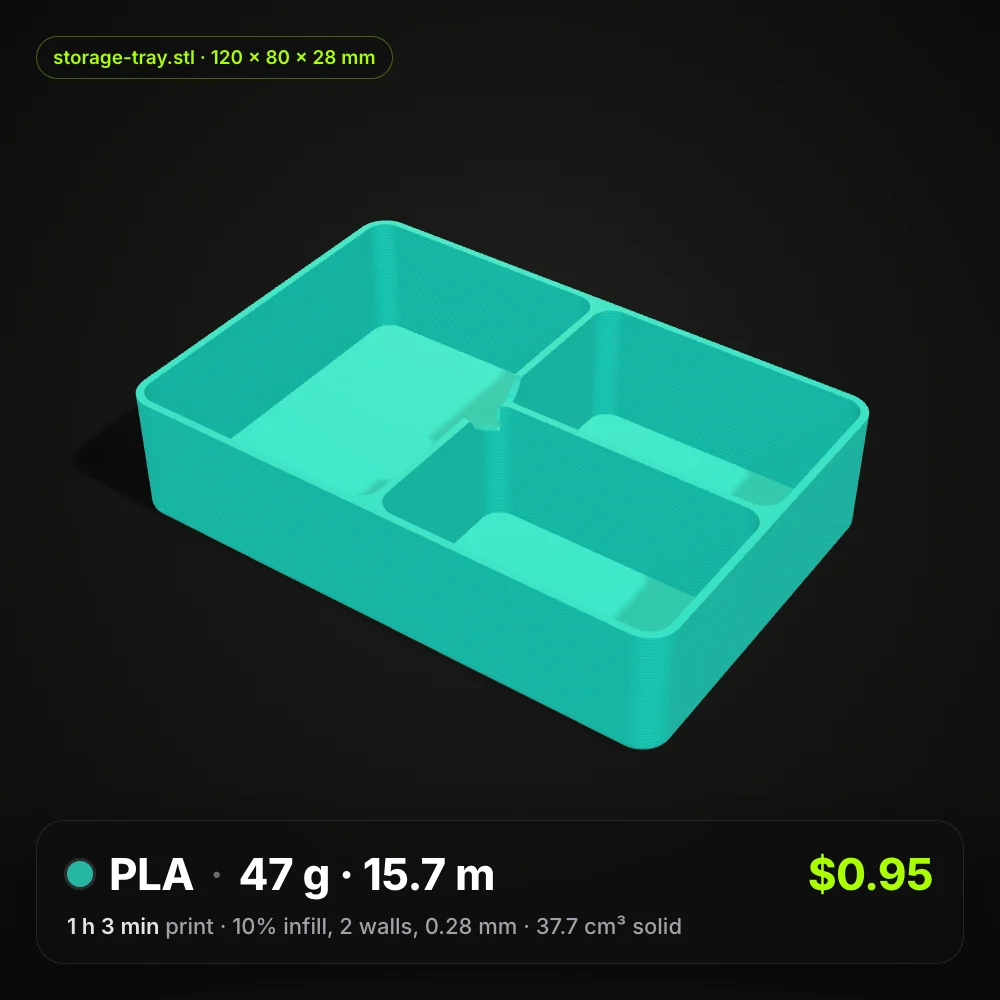
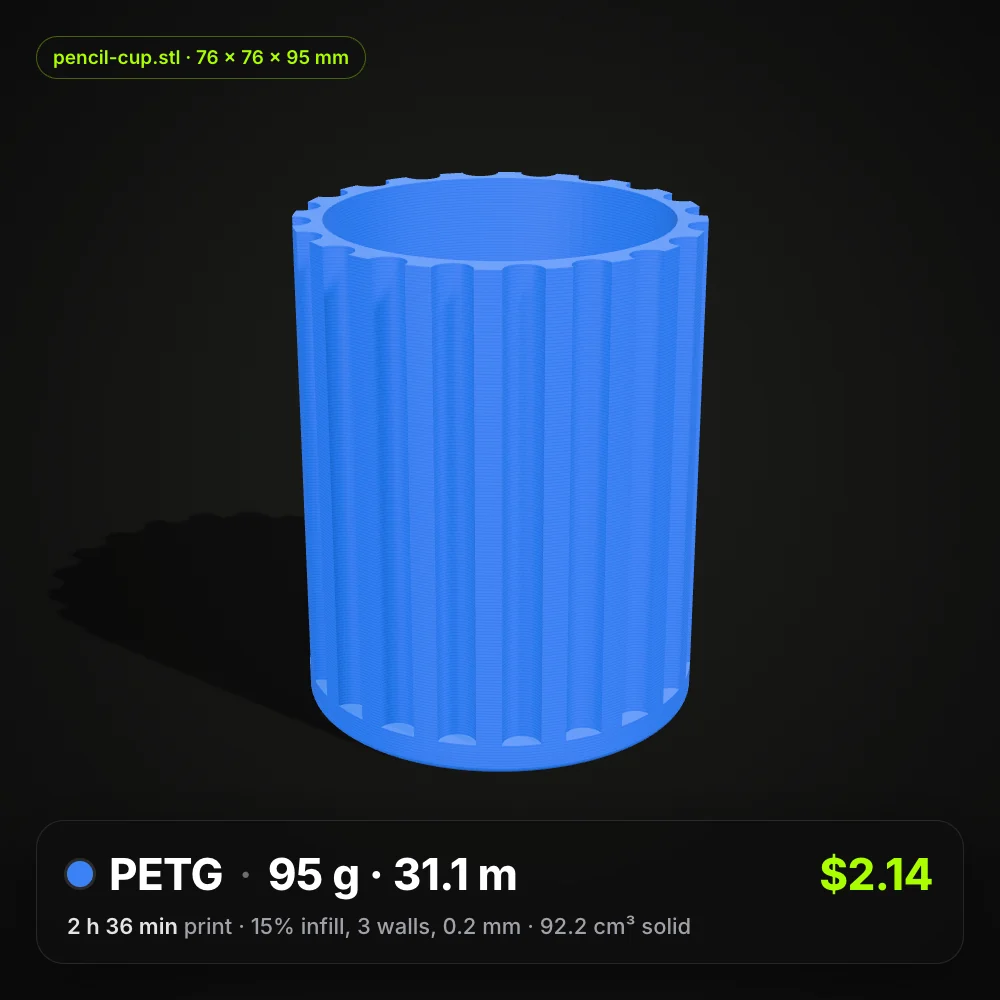
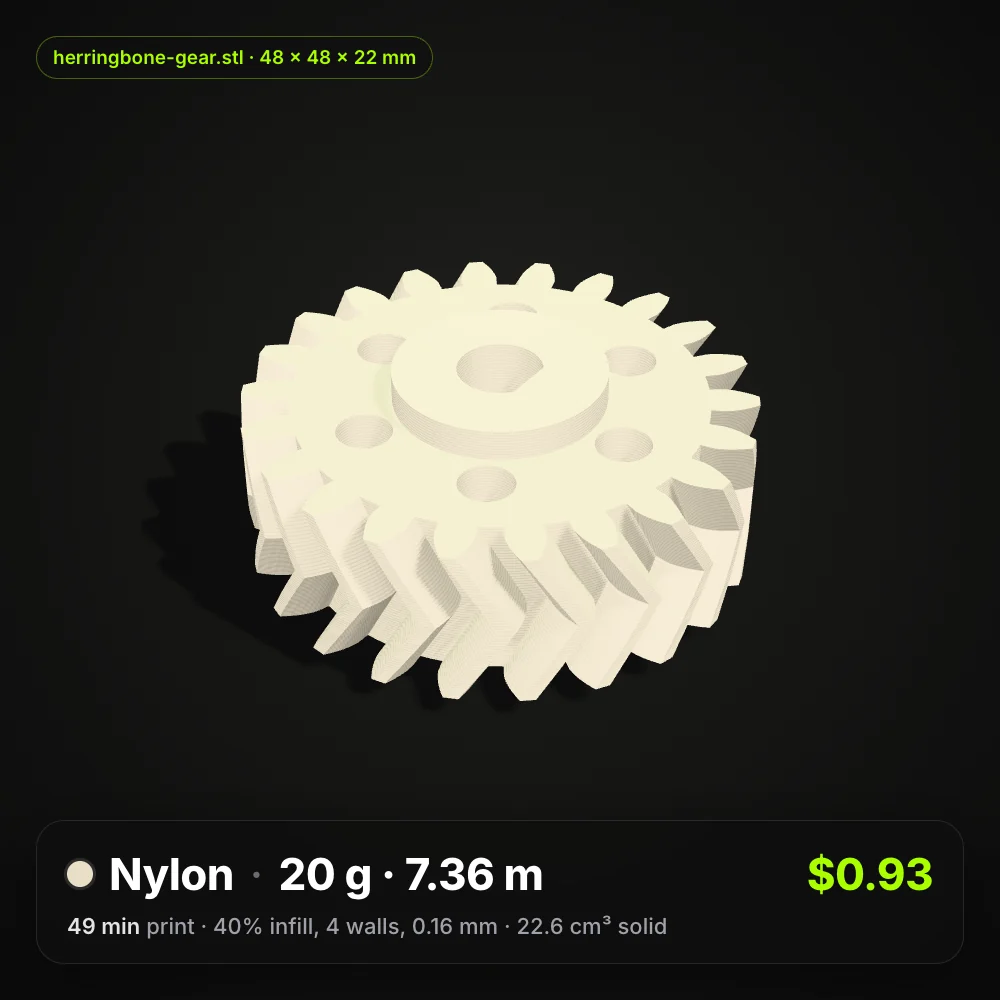
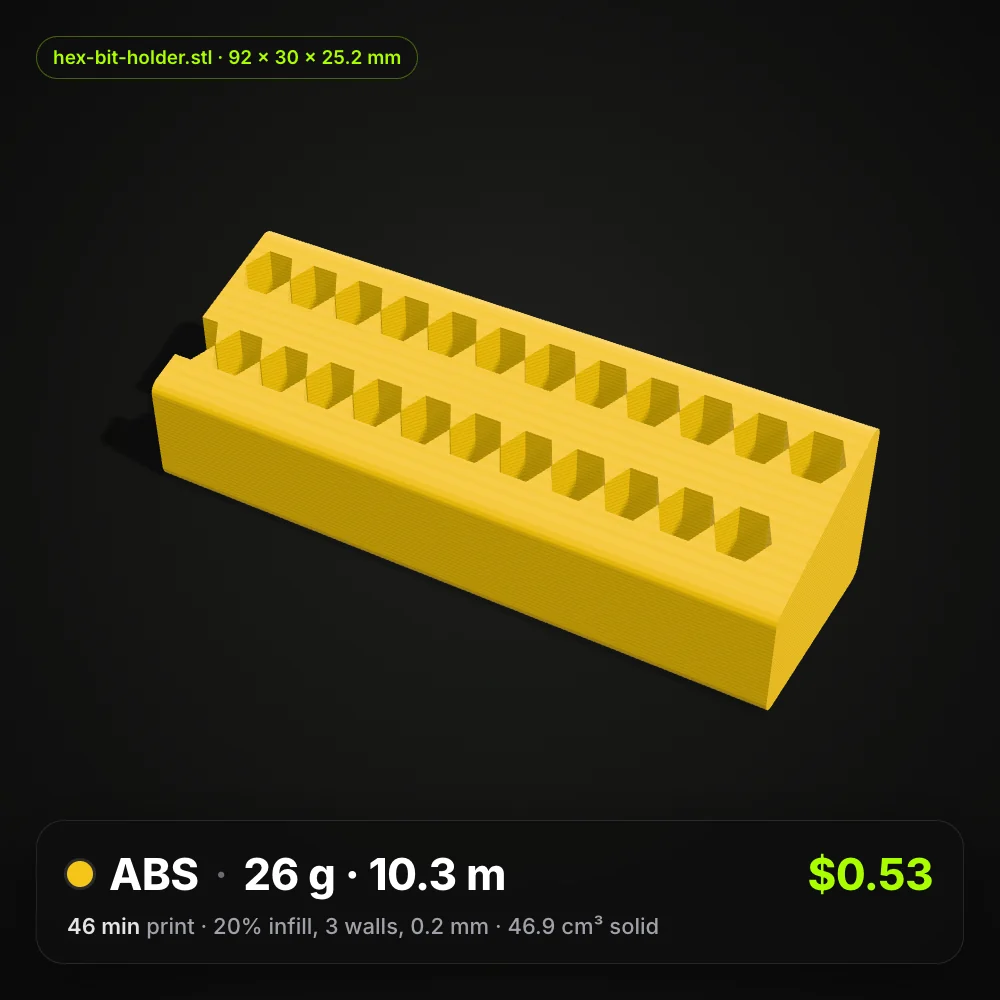
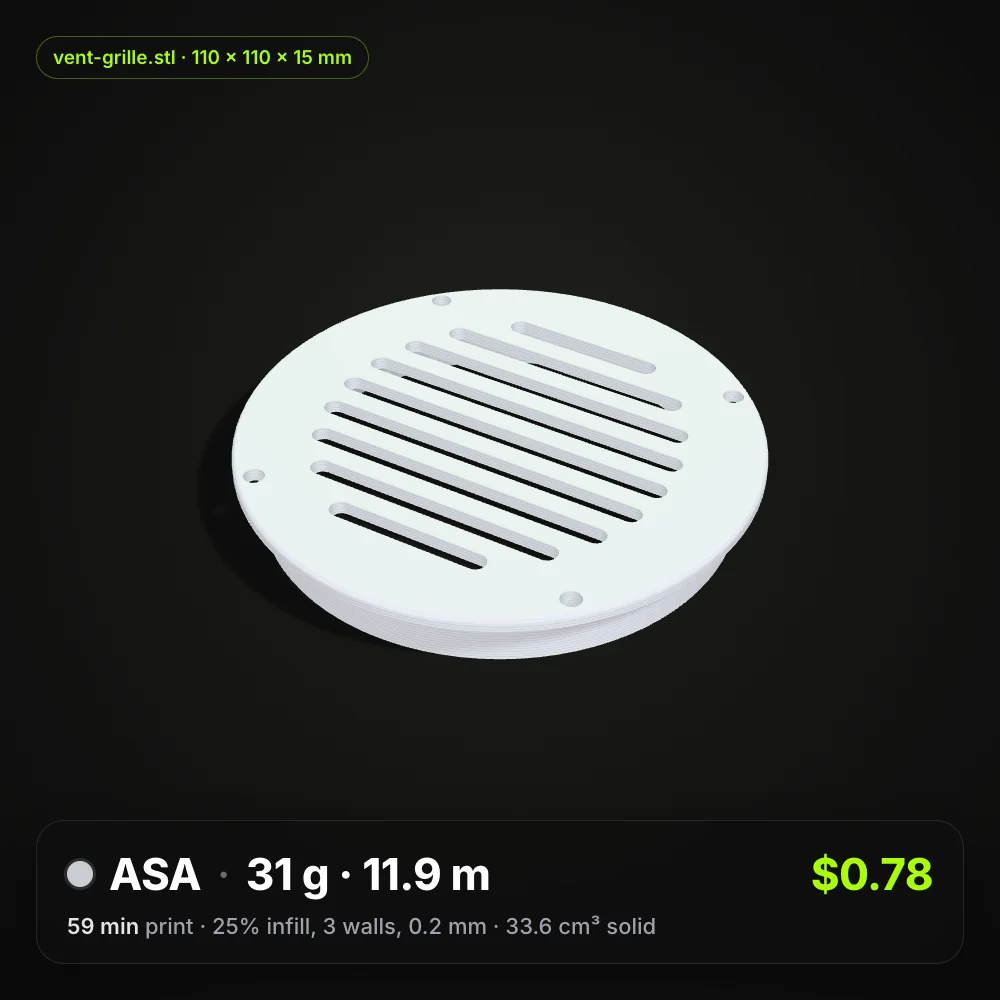
Each card shows the part, its size and solid volume, the settings used and what the 3D print cost calculator returned for weight, filament or resin, time and cost (material plus electricity at example USD prices). Compare the storage tray with the bit holder: the tray has less model volume (37.7 cm³) yet weighs more (47 g of PLA) because its thin walls print solid, while the chunky bit holder’s 46.9 cm³ comes out at 26 g of ABS, most of it sparse infill.
How to calculate the cost of 3D printing, step by step
- 11
Measure the model
Drop the file into the 3D print cost calculator or pick a sample. It adds up the volume the mesh encloses, shell by shell, and shows it in cm³ next to the size in mm. Check File units first: STL and 3MF are normally millimetres, GLB opens in metres, and Scale or Longest side fixes a model that arrives at the wrong size.
- 22
Turn model volume into printed volume
A printer does not fill the whole model. The tool adds the outer walls (wall count × a 0.45 mm line on a 0.4 mm nozzle), the top and bottom skins (layers × layer height), your infill share of what is left inside, then supports & waste as a percentage. The 73.4 cm³ planter becomes 54.9 cm³ of printed plastic.
- 33
Convert it to grams and metres
Weight = printed volume × density: 54.9 cm³ × 1.24 g/cm³ = 68 g of PLA. Filament length = volume ÷ the strand’s cross-section (2.41 mm² for 1.75 mm filament), here 22.8 m. That is the 3D print weight calculator half of the job.
- 44
Price the material
Material cost = grams × price per gram. At an example $20 per kg, 68 g costs $1.36. Resin is priced by volume instead: ml × price per litre ÷ 1,000. Type your real spool or bottle price into Price per kg or Price per liter and this works as a 3D printer filament cost calculator for your own stock.
- 55
Add the electricity
Print time comes from Average flow on a filament printer (54.9 cm³ at 10 mm³/s ≈ 1 h 32 min) and from layers × time per layer on a resin printer. Energy = hours × printer power: 1.53 h × 120 W = 0.18 kWh, which at $0.16 per kWh adds $0.03. Set Printer power to your machine’s real draw and it doubles as a 3D printer cost calculator for running costs.
- 66
Add selling costs if you sell
Switch on Selling price for machine wear per print hour, hands-on minutes × your labour rate, a failure buffer on material, power and machine time, a markup and a quantity. You get a price per piece and a total for the order, and Copy turns this 3D printing cost calculator result into a text quote.
Filament and resin densities, with one part priced in each
Density turns printed volume into grams (the 3D print weight calculator side of the tool), which is why the same print weighs less in ABS than in PLA. These are the 3D print cost calculator’s default densities (typical datasheet values) and example prices; both can be edited. The planter column shows the sample at default settings (filament: 15 % infill, 2 walls, 0.2 mm layers; resin: solid, 0.05 mm layers, 10 % supports), material cost only.
| Material | Density · example price | Planter pot: weight · time · material | Typically used for |
|---|---|---|---|
| PLA | 1.24 g/cm³ · $20 / kg | 68 g · 1 h 32 min · $1.36 | Prototypes, décor, planters, figurines; the easiest filament to print, but it softens in a hot car |
| PETG | 1.27 g/cm³ · $22 / kg | 70 g · 1 h 54 min · $1.53 | Functional parts, brackets and storage boxes; tougher and more heat-tolerant than PLA |
| ABS | 1.04 g/cm³ · $20 / kg | 57 g · 1 h 42 min · $1.14 | Enclosures and heat-exposed parts; the lightest here, but it warps without an enclosed printer |
| ASA | 1.07 g/cm³ · $25 / kg | 59 g · 1 h 54 min · $1.47 | Outdoor parts that sit in the sun: ABS-like, with better UV resistance |
| TPU | 1.21 g/cm³ · $30 / kg | 66 g · 5 h 5 min · $1.99 | Flexible parts such as gaskets, bumpers, grommets and phone cases; printed slowly |
| Nylon | 1.14 g/cm³ · $45 / kg | 63 g · 2 h 33 min · $2.82 | Gears, hinges and wear parts; tough, but the spool must be dried before printing |
| PC (polycarbonate) | 1.20 g/cm³ · $35 / kg | 66 g · 2 h 33 min · $2.31 | Strong, heat-resistant functional parts; needs high nozzle and bed temperatures |
| Standard resin | 1.10 g/ml · $30 / L | 89 g (80.8 ml) · 3 h 55 min · $2.42 | Miniatures, display models and fine surface detail |
| Tough / ABS-like resin | 1.12 g/ml · $40 / L | 90 g (80.8 ml) · 3 h 55 min · $3.23 | Snap fits, keycaps and resin parts that take some load |
| Water-washable resin | 1.10 g/ml · $35 / L | 89 g (80.8 ml) · 3 h 55 min · $2.83 | The same jobs as standard resin, rinsed in water instead of alcohol |
Six ways to make a print cheaper
Thin-walled part? Count the walls
On the planter, whose sides are 2.4 mm thick, walls decide the weight: 1 wall gives 46 g, 2 walls 68 g, 3 walls 90 g because the sides print solid. Infill barely matters there, 64 g at 0 % and 91 g at 100 %. Use the fewest walls the part can take.
Chunky part? Lower the infill
Solid shapes behave the other way round. The figurine base weighs 9.8 g at 0 % infill, 15.6 g at 15 %, 25 g at 40 % and 49 g printed solid. Decorative pieces rarely need more than 10–15 %; keep 40 % and up for parts that carry load.
Orient it to need fewer supports
Supports are plastic you throw away. The 3D print cost calculator adds them as a percentage of the part, so 10 % supports means 10 % more weight, time and material cost (the planter goes from 68 g to 75 g). Lay big flat faces on the bed and turn overhangs upward before slicing.
Scale it down a little
Volume grows with the cube of size. Printing the planter at 80 % with the Scale field roughly halves its solid volume and takes the print from 68 g to 42 g; the figurine base drops from 15.6 g to 9.1 g. Check that holes and fits still work at the new size.
Hollow your resin prints
With Hollow the model on, a resin part keeps only a shell of the thickness you set. At 2 mm the figurine base drops from 43.2 ml to 21.2 ml of standard resin, halving the material cost. Parts that are already thin, like the planter, gain nothing. Add drain holes in your slicer.
Know what layer height buys you
On a resin printer, time follows height: the planter needs 1,760 layers at 0.05 mm (3 h 55 min) but 880 at 0.1 mm (1 h 57 min). On a filament printer, thicker layers mainly print faster, so raise Average flow to match a quicker profile. Time is worth most when you charge for machine hours.
3D print cost calculator FAQ
Multiply the printed volume by the material’s density to get grams, multiply the grams by the price per gram, then add electricity (print hours × printer power × price per kWh). For the planter sample in PLA: 54.9 cm³ × 1.24 g/cm³ = 68 g, at $0.02 per gram that is $1.36, plus 0.18 kWh × $0.16 = $0.03, so $1.39. Sellers add machine wear, labour, a failure buffer and a markup, and this 3D printing cost calculator handles all of those lines.
For a small part on your own printer, the material and power are a small sum: the eight example parts on this page range from $0.05 (a resin keycap) to $2.14 (a PETG pencil cup) at example prices. A print gets expensive through size, a costly material such as nylon or tough resin, and, for a paid job, labour: on the headphone hook quote, three minutes of handling cost more than the plastic. Run your own part through the 3D print cost calculator to see where it lands.
It depends on the printed volume, not the model volume: walls, skins and infill decide how much plastic goes in. The planter’s 73.4 cm³ model prints as 54.9 cm³ at 15 % infill and 2 walls, which is 68 g or 22.8 m of 1.75 mm PLA. A 1 kg spool of 1.75 mm PLA works out at about 335 m, so that pot takes roughly a fifteenth of a spool. Enter your spool price and the 3D printing cost calculator turns the same numbers into a filament cost.
Use an STL volume calculator that reads the mesh: drop the file into the 3D print cost calculator above and read Model volume in the results. It is computed from the triangles themselves (the signed volume of each triangle against a reference point, summed per shell), with sealed cavities subtracted and inside-out shells corrected; we checked the method against cubes, cylinders and spheres. If the mesh has holes, the tool counts the open edges and marks the volume as approximate. An STL stores no unit, so make sure File units is right.
Start from the true cost per piece, then add margin. Turn on Selling price and fill in machine wear per print hour, hands-on minutes and your hourly rate, a failure buffer and a markup. The headphone hook above, in PLA with 3 minutes of handling, costs $1.57 a piece and sells at $2.36 with a 50 % markup. For a final quote, slice the part and use “Use my slicer’s numbers” so weight and time are exact.
Only a little on thin parts, a lot on chunky ones. Going from 0 % to 100 % infill moves the planter (2.4 mm walls) just from 64 g to 91 g, because its walls already fill most of it, while the solid figurine base goes from 9.8 g to 49 g over the same range. Load your part into the 3D print cost calculator and drag the Infill slider to see which kind it is.
Related tools



No model to price yet?
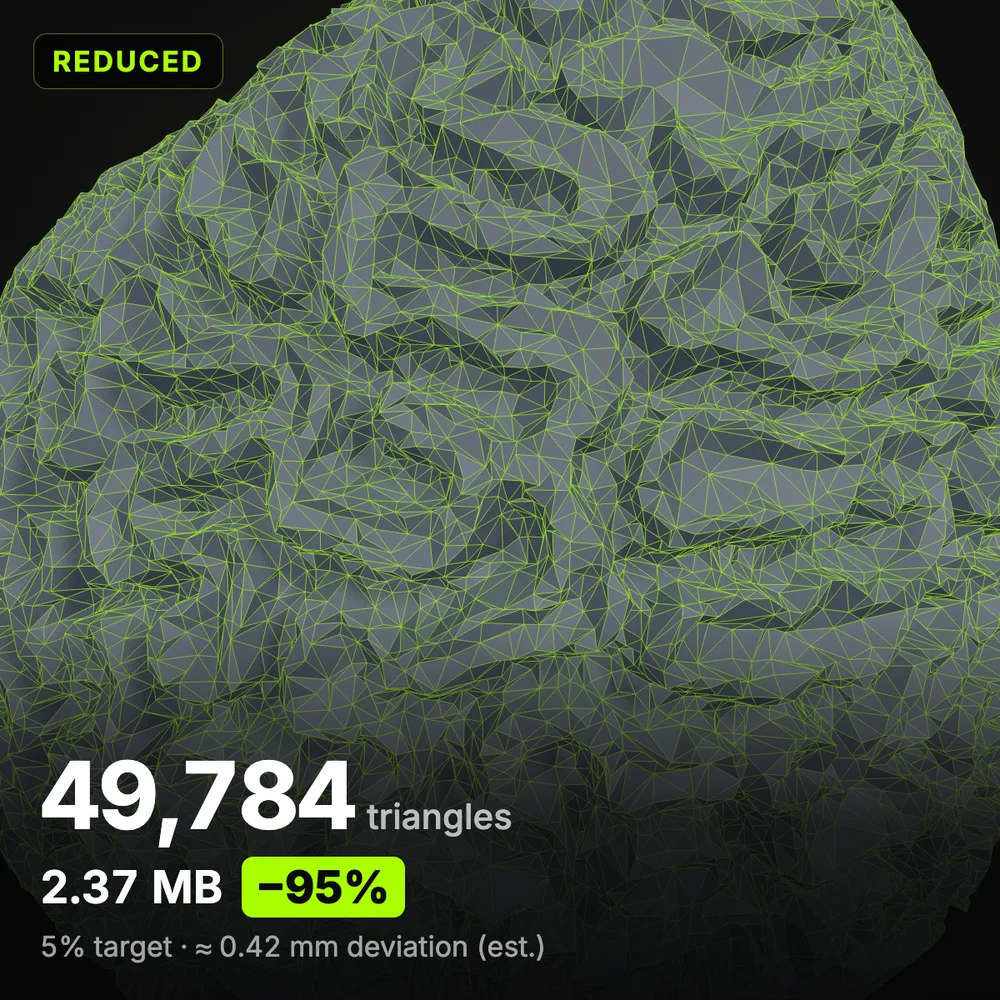
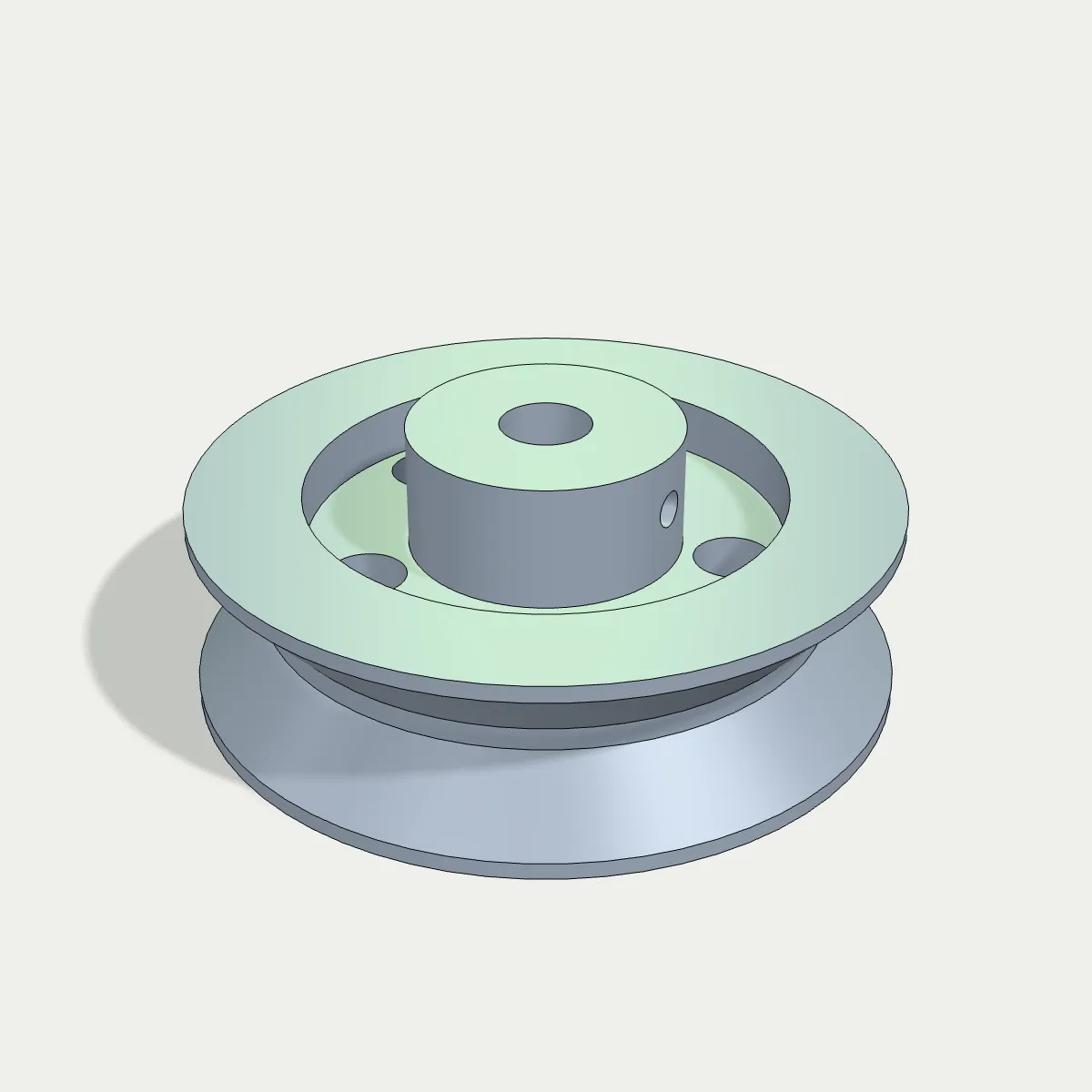
Describe the part or upload a photo, and Ship3D’s AI generator builds a 3D model you can download as STL. Then bring it back to the 3D print cost calculator to see what it will cost to print.
Free to sign up, no credit card required. Try it once for free.